
PROUDLY
CANADIAN
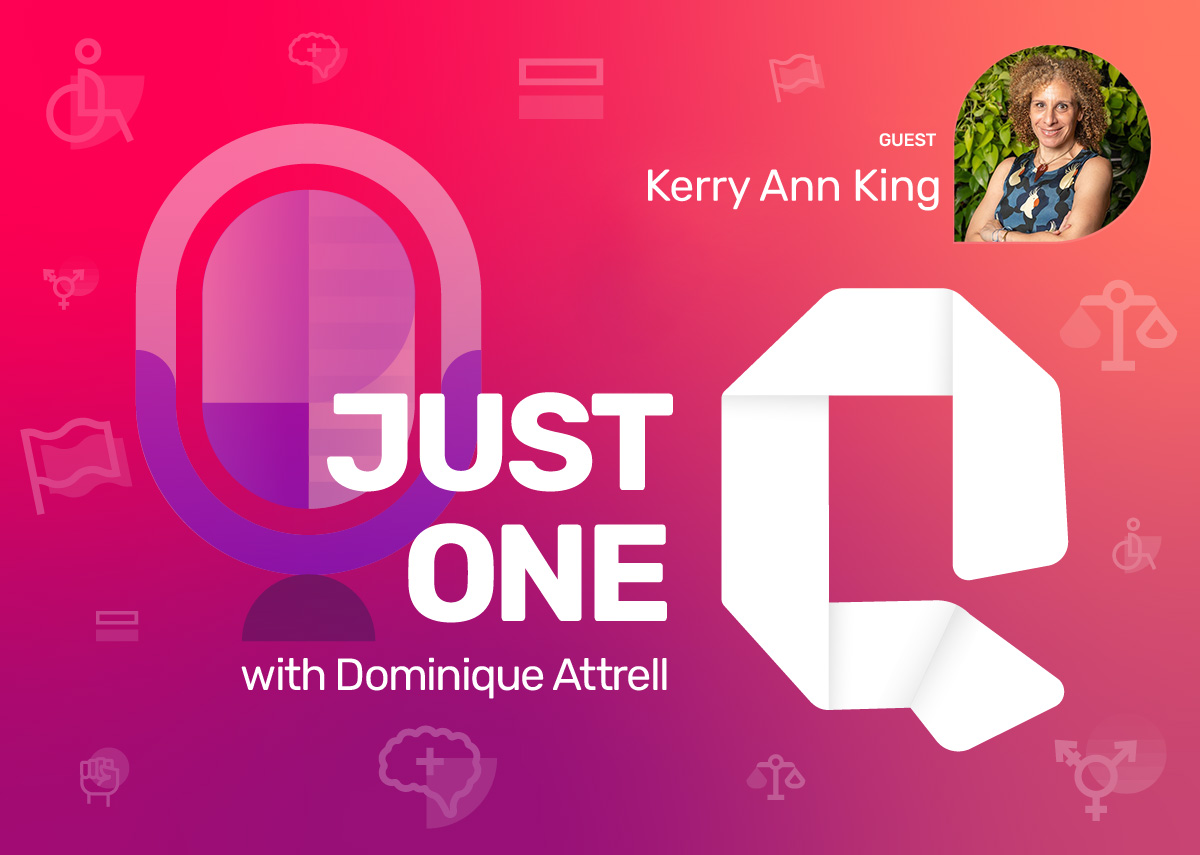
On this replay episode of Just One Q, Dominique chats with guest Kerry Ann King, a wellbeing and productivity expert and CEO of Eluminate Labs. They examine our relationship with “productivity” and how we can rethink it through self-compassion, understanding our productivity styles, and addressing the emotional factors that impact how we work. They also explore strategies for supporting neurodivergent individuals and building inclusive workplaces.
Dominique: Welcome to just one Q, the podcast where we explore the latest ideas in workplace diversity, equity, and inclusion in conversation with thought leaders and experts. Each episode a guest and I dive into a question that highlights their area of expertise.
The goal is to leave you with the tools and insights you can use to make your workplace better and more human friendly. I’m your host, Dominique Attrell. I’m a DEI, educator and advocate working for Dialectic, an inclusive workplace learning consultancy in lovely Guelph, Ontario, which is situated on the treaty lands and territories of the Mississaugas of the Credit First Nation and the traditional lands of the Chonnonton and the Haudenosaunee Peoples.
Today my guest is Kerry Ann King. Kerry Ann is a wellbeing and productivity expert with over 20 years of experience in pharma, tech and fitness. She’s the founder and CEO of Eluminate Labs where she’s developing solutions to enhance human wellbeing through inclusive and decolonized tech practices.
Kerry Ann offers a very unique perspective on productivity, blending her background in philosophy, psychology, and corporate wellness with her experience as a tech founder. She helps individuals and teams rethink productivity through self-compassion, behavior tracking and understanding the emotional factors that impact how we work.
Her insights go beyond traditional productivity hacks, focusing on sustainable ways to enhance efficiency and overall wellbeing. Welcome to the show, Kerry Ann.
Kerry Ann King: Thank you. Thank you for having me.
Dominique: I’m really glad that you’re here. And, the main question we’re gonna jump into today is a very important one and, one that I’m really passionate and curious about on a deeply personal level.
The question is, can neurodivergent adults heal our relationship with productivity? And, you know, I don’t talk about myself a ton on this show, but I will say that. In my household, there’s a real smorgasborg of neurodivergence. So we have under one roof autism and ADHD and learning disabilities and depression and anxiety and others.
And you know, I, yeah, it’s all, they all go hand in hand, right? And I often do wonder, and I’ll be honest, I worry sometimes that. About what the workplace will look like for my kids once all of those lovely accommodations of home life and the very highly tailored school environment, recede. And then they have to find their own, both internal and external rhythms in the ways that they’re going to work and, and be in the world. And I wonder, you know, will they have the tools and skills to be productive enough to hold down jobs and to invest in relationships and how are they gonna feel about how much they can accomplish? So these are, um, definitely big questions for me and for my family. And I know so many people. I think I know more neurodiverse people than the average probably. I think things skew that way. When you have a family with a sort of a neurodivergent mix, you end up kind of talking to a lot of different people who have that same situation. And it is. A question that’s, I think, at the forefront of a lot of people’s minds.
So for, for children, for the next generation, and also for people who are in the workplace currently, and grappling with productivity at a very personal level. Um, so before we dive into, uh, the topic of productivity, I, I really would love for our listeners to understand. A little bit about your current project and perhaps just the main problem, rather that it is trying to address.
Kerry Ann King: Thank you for that introduction and absolutely all of it. Right? There are so many ways in which we are all challenged with the idea that we have to be doing all the time and that if we are not doing, and our kids aren’t doing and our spouse isn’t doing and our doing isn’t doing, you know, it’s like it becomes this, yeah, it’s like this, it’s this. We’ve entered this very pressurized period when it comes to how we do things, why we do things, and getting things done. And then kind of additionally, I’m just gonna talk about the elephant in the room. We’re living through challenging times. There are a lot of people who, or let me put that a different way.
I think all of us are feeling somewhat challenged to stay focused with all of the chaos that’s going on. So really my thing that I’m trying to solve is how do we give people the ability to feel the sense of satisfaction and self-efficacy that comes with getting things done in a way that is true to their productivity style?
Hmm.
Because I feel like the way you get that sense of satisfaction and self-efficacy is by following your own style, not by trying to imitate something that someone else does in order to be productive.
Dominique: Right. I love that. So you’re kind of flipping it on its head a little bit instead of how can we squeeze the most out of ourselves?
It’s more how can we feel satisfied with the degree and the type of productivity that we have to offer. Is that sort of
Kerry Ann King: Oh, absolutely. And I think even, or additionally, it’s really about not succumbing to what I will just call out as internalized capitalism, that you have to keep extracting value from yourself in order to feel worthy and trying to back away from that without then giving up all of the power that comes with being able to get things done.
Dominique: Right. Yeah. Right. Like that’s, do you wanna be productive at the end of the day, there is even, you know, when I think about my kids, it’s not just, do I want you to be a great cog? You know? No, it’s, it’s bigger than that. It’s like, do I want you to be able to function and get through the day and have enough gas in the tank to then invest in, perhaps a marriage or a relationship or to raise kids, which takes a ton of energy. Um, are you going to walk the dog every day? Are you going to be able to do, you know, all of the tasks, that really do make life complete and beautiful and all of those good things? Rather than, you know, is your boss gonna be thrilled and give you a great review?
Kerry Ann King: You know, it’s so funny the way you put that. ’cause one of the things that I think is really important when we talk about productivity, we are frequently talking about techniques and particularly with kids, right? This, this idea that if I or my child or my employee uses these specific techniques, that they are going to suddenly be a productive person in a way that feels more comfortable to someone who’s neurotypical or feels like they are getting more done in the direction that we expect things to go. And I think one of the things we ignore to our peril in our desire to be productive is attitude and feelings.
Dominique: Hmm.
Kerry Ann King: Right, so techniques are great and task lists are great, and understanding all that stuff is really important and I’m a huge fan of techniques. I think it’s important for us to explore them and see how they make us feel, rather than just say, oh, I finally, if I do this technique, I’m gonna be better. But even beyond that, the feelings you get from being productive, the feelings you get from doing things, even things that aren’t necessarily super meaningful, is part of what drives your productivity.
Dominique: Hmm.
Kerry Ann King: Um, I’ll take the, the example of doing the dishes. You know, I live in a household with, um, three of my four adult kids and getting people to do the dishes is not, you know, it’s like a, you know, it’s a, it, it’s a. I didn’t wanna call it a struggle. It’s a process. Sure. And that’s, and that’s what shifts it, right?
When I started to see that as a process, not just something that I had to be mad about, or anxious about, or upset about, or resentful about, it shifts my way of dealing with everybody in my house. It shifts how I feel when I see a sink full of dirty dishes. It shifts how I talk to everybody about the dishes, and I think that is really a crucial part of backing away from this idea that doing things is this conflict laden force laden activity to it being a process. Yeah. And how do we understand that process and live in that process rather than trying to see it as, um. For lack of a better way to say it. Like a list of things that need to get done.
Dominique: Yeah. Yeah. And like I think there’s a lot of parallels between what you’re saying and the experience of a manager.
Um, I think like parent and manager are often sort of similar when it comes to productivity. Um, but what about that internal perspective? Like, I’m guessing, you know, neurodivergent adults in the workplace today probably understand that there’s a difference in how they approach work and how they work. What would your goal be for them?
What are you trying to accomplish for adults?
Kerry Ann King: A lot of the work we’re doing with our debut product, Fin Productivity, grew out of my former co-founder’s experience with his own neurodivergence in the workplace and also mine. I am not, necessarily classically neurodivergent, but I was diagnosed as being dysgraphic as a child and I did have productivity challenges really all the way up through college.
And, the idea behind it was how could he developed a way of getting his stuff done at work? And we were combining kind of my experience of a self-knowledge journey in terms of learning what my productivity style really was and being able to then harness that to be productive in the workplace in a way that pleased my management chain and his similar experience, but more technique based. Doing the same thing. And really for me, I think when we understand our productivity style well and can lean into our style, A: it just makes us more productive, right? Because we we’re doing what feels good, what works well for us. But then it also gives you the opportunity to self-advocate in the workplace. If you are a person who has a tendency to need deadline pressure to get things done, which is frequently true of people who are in the ADHD ca category, if you are able to talk through that in a meaningful way with your colleagues, you’re reducing their anxiety. Right? Because you have to be aware. It’s not fair to just be like, oh, I need to wait till the last minute while the rest of your colleagues are like sweating, like, oh my God, is it ever gonna get done? Yeah. That’s not fair. Right. But if you can. Begin a discussion around that, then you can adjust to what will make them comfortable, but while also advocating for yourself.
Mm-hmm. And not just trying to struggle to do things the way everybody else is doing them and fail.
Dominique: Hmm. So what I’m hearing is that that clarity and self knowledge about your style is sort of a very key piece of self-advocacy in the workplace. How does your product help create that clarity?
Kerry Ann King: So we have, uh, a couple of ways that we address that.
First of all. The way Fin works is you have a list of tasks and a list of routines, tasks are things that you have to do, routines are habits that you wanna build. And each day you get a summary of how things went the day before. And that summary includes your emotional reactions to getting things done, as well as just how many things you got done.
So when you complete something, you’re asked to put an emoji, choose an emoji that goes with getting that thing done. And looking at that summary, one of the things that’s really interesting about that summary is, A: it gives you a sense that you did stuff right? Right. Because so much of what we do in today’s world, particularly in the corporate world, disappears, right?
You write the email, it’s gone, you do the presentation, it, the deck goes in your drive and. It’s over. We have so little access to that kind of satisfaction that is tangible anymore. Yes.
Dominique: Yeah.
Kerry Ann King: Part of the purpose of that is to make it tangible. You completed this presentation, you were proud when it was done. And just seeing that day to day is part of the way that we help people internalize their, productivity style. We also have coaching. So, if you choose to have the coaching version of the app, you will get direct coaching on tasks, coaching, just general questions you can ask. And then you also get additional feedback that’s both about what you’ve accomplished and also what you’re not accomplishing, right? So if you’re the, my favorite example of this is Clean Out the garage. First of all, like whoever’s listening, don’t put clean out the garage on your to-do list. Just please for me, don’t do it. Because like it’s a project, it’s not a task. Yeah. It’s, uh, super complicated. It requires so much, uh, thought and energy and time that it’s not something that belongs in your to-do list. But anyway, the, the thing about that is ordinarily if you put that on your list. You just, it’s just sitting there. It’s gonna make you feel awful. With Fin, what we have is the opportunity as the coach to say to the person, A: this is not a task, this is a project let’s break it down into its component parts. Yeah. But also, B: you’ve had clean out your garage on your list for 10 days and you haven’t done anything about it. What’s going on? Why is this stuck here? And that’s a really important conversation sometimes to have. It’s, it’s the spiders. No one likes them.
Well, but that’s just it. And that’s the beauty of the individual coaching. It’s like, for some people it’s the spiders. For some people it’s the anxiety of, of having to decide what things to throw away. Mm-hmm. Because am I really gonna throw away of my kid all my kids’ drawings from second grade? For some people it’s this the kind of overwhelm of knowing what to do with all the stuff. It’s, you know, and that’s really one of the most important things that we can do by coaching people individually, is help them get to that thing. Hmm.
Another example that I would use is one of the things that people procrastinate about a lot is medical appointments, right? Medical procrastination is a fairly well documented phenomenon. But when we start to examine why people are not completing that task, frequently anxiety is the emoji they choose, right? But what is that anxiety about? For some people it’s anxiety that the appointment won’t go well. For some people it’s anxiety about being examined and just being in that atmosphere where their body is going to be approached in a way that doesn’t feel comfortable.
For some people, it’s financial anxiety.
Dominique: Hmm,
Kerry Ann King: I don’t wanna go to the doctor ’cause it’s gonna be expensive. I don’t wanna go to the doctor and find out I need treatment that I can’t afford. So, really getting down to that next layer of what’s preventing you from doing the thing is super important for solving the actual problem.
Dominique: Hmm. I love that. I love the, that you’re offering that encouragement and that sort of help with pattern recognition and that that emotion is really, the driving force then for change. And like at the end of the day, we want to establish habits that are healthy, that make us feel good, and that kind of put that at the forefront as well, rather than, you know, do this list even if it makes you feel wretched.
Sort of like, you know, let’s make a list that’s actually achievable that you can feel good about. What is the impact, in the workplace or maybe the manifestation of this not happening? So like neurodivergent adults not having clarity about, their productivity styles, the emotional responses that they might have to certain tasks, the patterns or why things are put off or delayed , the ability to have conversations, all of that like. Without those pieces and I’m gonna, I’m asking because I think a lot of people are just like living in that right now. Right? So what does that look like? How would I identify that I’m a person who’s living in that mess?
Kerry Ann King: I think, and I wanna emphasize that this is a two-way street, but I think from the point of view of the employee or the individual, frequently, it can feel like you’re always kind of clawing your way out of things or, you know, hurrying, stressed, not able, feeling like you’re not able to manage, feeling like you’re getting asked questions about how things are going or why things aren’t done, or how you’re doing something that sounds like they’re questioning your methodology.
All of that can be a part of this kind of lack of awareness. Um, really good managers are able to ask questions that help clarify and then excellent managers are able to, once they have that understanding, really try to develop the person’s strengths and view that person through their strengths and not their weaknesses and manage to their strengths.
But for a lot of us, particularly, if we’re working with someone who’s new to being a manager and they don’t have that experience of having to help someone adjust in the environment, it can be really feel like a, like a very. Like a struggle. Mm. Like the friction can sometimes be really, really difficult to manage.
And that of course then leads to more anxiety, more feelings of lack of self-efficacy, which don’t make people more productive. Right. Feeling, yeah. Feeling like you’re failing is not a great way to feel like you could succeed. So it really can become a super toxic cycle if it gets really bad of you’re not doing this the way I expected, but I’m trying so hard, but you’re not doing it the way I expected.
And it just, it can be really demoralizing. Spirals. Spirals. Yeah. Yeah, yeah.
Dominique: And like, I wanna dig into that a little bit because I think, you know, we set up, up at the top. This is a lot bigger than just sort of optimizing myself so that I can be a better employee. Um, so, and we talk about, you know, our main question was about healing because there is a lot of that negative spiral of guilt and shame for people who are constantly feeling like they’re falling short. So what is it that is possible? Like, I wanna, maybe that’s a good way to ask, ask this question is, um, what does a, on the flip side of that spiral, what can I aim for? Like what’s an actual goal that a person could set that honors themselves as a person, not just their productivity as an employee?
Kerry Ann King: Yeah.
And that is such a great question. Really, I think the, the goal is to come out of this process with an understanding of your style and the ability to, A: use your style effectively, and then B: explain your style to others and have a dialogue with them about it that makes everybody feel understood. And I, I’ll use the example of, um, when I was, uh, working for XS at Google, I had this habit of being in my chair at my desk at like six 30 at night on a Friday and everybody would be leaving, who’s going out, who’s going to dinner? Blah, blah, blah. What are you doing this weekend? And I would be sitting there furiously working at six 30 on a Friday, and I would feel awful. What’s wrong with me? Did I waste the whole week? Why didn’t I do this earlier? Why am I doing this now?
It was like, be, you know, it would become this spiral of guilt about it. And then at some point. I had the realization way, it took me way longer to realize this than was helpful in a certain sense, but I finally realized that part of what was happening was that Friday evenings were the time when my husband got home early from work, and I knew that my four kids were with my husband. Dinner was gonna be cooked. Nobody’s homework wasn’t gonna be being done. Everybody was gonna be safe and happy, and entertained and taken care of. And that allowed me to focus,
Dominique: right?
Kerry Ann King: And once I realized that a whole bunch of possibilities opened up, I could have a conversation with my partner and say, listen, I don’t know if it bothers you that I work late on Fridays, but I’m feeling like it works really well for me.
Is that okay? It turned, he was never really, negative about it. But it turned into like a positive, right? Him texting me like, I’m home, I’m making dinner. Everybody go for it. Doing great. Stay, you know, stay as long as you need. We’re, we’re doing fine. It allowed me to plan my work, right? So. If I knew that I had something that required that kind of attention that I was able to give at that late hour on a Friday, like payroll stuff, for example, I would just do it then.
Dominique: Hmm.
Kerry Ann King: Rather than putting it in my calendar for the middle of a Wednesday when so much of what I did that was effective was better served by me, not sitting at my desk. Like a lot of my job at that time involved relationships with different teams in the office and promoting our services to them, I couldn’t be doing that sitting at my desk.
Dominique: Yeah. Yeah. I love this example so much. I feel like a lot of people who are having that sort of negative spiral experience, so many of those realizations need to happen like you’ve just carved. That’s like one of the haystack, right? Where you have figured out your Friday afternoon quirk and you’ve unpacked that and you’ve made sense of it, and you can then turn around and make that positive. But there’s probably, you know, a whole bunch of those all throughout the week, at home and at work and wherever you are. So there’s a lot of work to do in terms of that, that unpacking, um, to get from the, you know, on this journey from the negative spiral place to feeling like you have enough information and self-knowledge to actually self-advocate or make decisions that are healthy and constructive for you. So I wanna ask you like, what is that? Is that journey possible? What does it look like for adults who maybe they’re newly diagnosed or are just trying now to figure this out? What can that journey look like?
Kerry Ann King: Yeah, and this is so important because I feel like there’s two things that are happening right now. One is a lot of adults are having kids who are diagnosed with some sort of neurodivergence and then the parents are suddenly saying, Hmm, sounds awful like me. You know? I guess I’m kind of, and the thing is, as adults, what we’ve done is figured out all kinds of different ways that we can get around that quirk, whatever it is that. Sure. Neurodivergence, but they might, A: be unconscious, like we’re not aware that that’s a hack. We’re just aware that that’s how we have to do things. And, B: sometimes they’re negative.
Dominique: Hmm.
Kerry Ann King: Right. Sometimes they, they can kind of lean into like self punishment, like, sure, I’m gonna grind because it’s the only thing I can do.
And if I, you know, so. So building that awareness can sometimes be triggered by just finding out that, hearing the diagnosis and being like, oh, well maybe this applies to me.
Dominique: Yeah.
Kerry Ann King: I think also, again, we are in a period of human history where there’s a lot of stuff that’s distracting. Mm-hmm. Everything from your phone to the global geopolitical situation.
Yeah. It’s like there’s, yeah. There’s like so many things that are conspiring to make it difficult for us to focus. So I think all of us, yeah. Tariffs. I mean, today we’re talking Yeah, we’re talking cross nationally. Yeah. So I think we can all benefit from doing this examination. However, I think particularly for people who are diagnosed with neurodivergence in adulthood, there is kind of an identity shift that happens.
Dominique: Mm-hmm.
Kerry Ann King: When I was in graduate school, I was studying ethnic and racial identity. And one of my, actually the person who was going to be my, dissertation supervisor. Bill Cross had developed this model of identity development for African Americans, for black Americans.
Dominique: Hmm.
Kerry Ann King: And it is really like based on his thinking about how a black identity emerges in the face of challenge and racism. So the idea is there’s this pre-encounter phase where you are not, not aware of racism, but you don’t necessarily encounter it directly. Mm-hmm. In the same way. Then there’s this phase called encounter, which is your encounter with racism. Oh my God, this is a real thing and it applies to me.
Dominique: Mm-hmm.
Kerry Ann King: Um. Then there’s immersion and emersion. So immersion is identifying with your culture and immersing yourself in it. And then emersion is coming out of that phase of somewhat more self-focused exploration to being able to look into the wider community and the wider world and see where you can have an impact with that identity well integrated for yourself.
Dominique: Hmm.
Kerry Ann King: I think something really similar happens, particularly for adults who are diagnosed with, some sort of neurodivergence. There’s this realization like, oh, I actually do do things differently than other people. Or I experience the, um, like my experience of productivity is different from other people’s.
Dominique: Yes.
Kerry Ann King: And that can be a shock to realize that there’s a word for the way you do things. I think it is really important to immerse yourself in understanding that. Hmm. Really not just from an outside perspective, because there’s plenty of literature that you can read. The thing about the literature, and this is something I, you know, I used to say this to people when I was talking about weight loss when I was in fitness. The literature tells you what happens in average in aggregate.
Dominique: Sure.
Kerry Ann King: What happens inside you is individual, and that goes for techniques that can help you be more productive if you’re neurodivergent, but it also goes for like your particular way of doing things. And it’s really important not to only take this external information and assume that it all applies to you.
Dominique: Right? Like, I have a ADHD, therefore this and this is gonna work for me and Yeah.
Kerry Ann King: Yeah. Or I can’t do these things. Right. Right. And that’s, to me, that’s a really important thing. Whatever it is, the I can’t is your enemy is too strong a word. Mm-hmm. But it’s, you know, getting stuck in the, I can’t
Dominique: Yep.
Kerry Ann King: Is something that you frequently see.
Dominique: Yes. That’s why I don’t give my kids lists of what their particular diagnoses are, because it’s like, I don’t want you to turn that around and say, oh, well, I, I am not doing that because. My excuse is autism or whatever. Um, exactly. And that’s not to say there won’t be challenges in certain areas, but it’s a, it’s a mindset, right?
Um.
Kerry Ann King: It’s a mindset and, you know, uh, current events aside, it’s always been true that neurodivergence doesn’t make, you mean, it doesn’t make you irresponsible.
Dominique: No.
Kerry Ann King: It doesn’t make you an asshole.
Dominique: Nope. Yep.
Kerry Ann King: What it, what it does is it means that you perceive things differently than other people, and you need to do different kinds of work than other people need to do.
Dominique: Mm
mm-hmm.
Kerry Ann King: To be in the world.
Dominique: Mm-hmm.
Kerry Ann King: We all need to do the work to be in the world, right?
Dominique: Mm-hmm.
Kerry Ann King: It’s just the work that you do as a neurodivergent person
Dominique: Yeah.
Kerry Ann King: Has a slightly different cast than the work that someone else might be doing.
Dominique: Absolutely. So with the stages, right? For me, an example would be like, the encounter could be something like burnout, for example.
Kerry Ann King: Mm-hmm.
Dominique: Right? Yeah. Like I’ve been grinding, I’ve been trying, I’ve been doing all this and like it’s easy. It seems easy for everybody else and I just keep, like I hit the bottom so many times that I can’t do it anymore. And we know, you know, autistic or ADHD burnout looks very different than even sort of burnout for a neurotypical person and the healing process there is very different. So, I know quite a few people who’ve had that experience, and then the immersion is that, is what you’re saying, like the immersion part would be the chapter in which you then get a handle on your own patterns. Okay.
Kerry Ann King: Absolutely. That’s, and really that’s why I feel like immersing into the self is also important as well as immersing into just general information, right? Really understanding yourself. I, one of the things not to get too deep into. Psychological theory, but, um, Fred, I mean, John Bowley I think was the person who really originated rupture and repair. But Fred Pine talks about it about as well. I mostly, got it from Fred Pine when I was doing my degree, but there’s this idea in parenting that there’s rupture and repair, right?
You’re never gonna not do the wrong thing with your kid. The question is, what’s the thing that you do next? Yeah. Do you repair the relationship? Um, and I feel like this is also true in neurodivergence with the self, the experience of having failed at something is experienced almost as a rupture with the self, as opposed to just a failure to do a particular thing.
Dominique: Mm-hmm.
Kerry Ann King: And for me, a lot of that immersion part is repairing that relationship with the self and putting the mechanisms in place where you can, rather than spiral, repair that relationship more and more quickly and effectively when things don’t go the way you’re hoping.
Dominique: Yeah. Yeah. I love that. I also like the idea that it’s like sort of a self-contained chapter where there might be a lot of that repair work that has to happen and you might do a lot of learning and a lot of digging, but it’s not forever like, ’cause that’s exhausting too, right? Is like being immersed and then you’re doing all this self-analysis and all of this poking around in your own patterns and um, it’s nice to hear that there is then emersion with some sort of integration in mind and that you don’t always have to be kind of doing that very heavy lifting, which might be happening in that sort of more immersion period.
Kerry Ann King: Yeah.
And I think also I, I’m gonna be honest, I think people do get stuck in immersion. Mm. Right. I think we all know someone who, gets trapped in the idea of their own self-reflection or trapped in the idea of a particular identity for themselves. And it almost never ends up being a positive thing. Hmm.
Right. The idea is that when we fully integrate things about ourselves, what we’re able to do is go outside of ourselves and be impactful in the world.
Dominique: Yeah.
Yeah.
Kerry Ann King: And that’s, you know, when we talk about this in terms of the workplace, the goal isn’t for you to say to your manager, I am neurodivergent and you can’t expect me to do things that you ask me to ever.
Yeah. Well, that’s not the goal. The the goal is to be able to say, I am neurodivergent and I want to be part of this team and wanna do what needs to be done for us to succeed. These are the things that I do, to get things done, to succeed, to be creative.
Dominique: Mm-hmm.
Kerry Ann King: How can I fit into your team?
Dominique: Yeah. And I mean, I wanna ask you about that because that’s something that I’m hearing a lot from managers , as somebody who helps organizations become, more inclusive, more human friendly, hire more broadly, et cetera.
Now we have managers who are fully on board who wanna do that, but we also have a lot more adults who are, you know, self-identifying as neurodivergent or disabled. And managers are sort of left feeling like. I can’t get enough out of my employees. Or like, is it inappropriate for me to hold certain employees to the same standards as others?
Where’s the line there? How do I navigate this as a manager? So what advice would you give to a manager who feels that tension?
Kerry Ann King: So if you’re a manager, it’s your job to get your team to do the things that need to be done for the organization. So you should never feel like you can’t do that. That’s your job.
The thing is, if you’re approaching people, and this really kind of goes for anybody, neurodivergent or not, if you’re approaching people from the point of view that, they are a function and you need them to do a thing. You’re missing out on the thing that actually creates efficiency, which is your relationship with the person.
Dominique: Mm-hmm.
Kerry Ann King: Right. Your, your relationship with the person is how you manage them, not by telling them what to do. And that goes for neurodivergent people as well.
Dominique: Yep.
Kerry Ann King: So if you take a compassionate, and I, I do think sometimes that word feels overused. But, to me the most important thing about the word compassion is its definition, which means you recognize what is true about the other person, and if it is a difficulty, you want to help.
Dominique: Hmm.
Kerry Ann King: Compassion implies action, which is great if you’re a manager because your job as a manager is to act in ways that increase other people’s ability to do their job. Yes. Yeah, so, so taking the view that what you should be doing is figuring out that person’s strengths, figuring out how those strengths fit into your team and playing to those strengths, is really the most important thing to do. One thing that I think is really useful for managers, particularly new managers, but I think everybody can benefit from doing this, is to do care and feeding instructions with employees and not do them once.
Dominique: Hmm.
Kerry Ann King: Because frequently people aren’t used to thinking them of themselves in this way and things change as they get integrated into your team. But having a conversation with someone at the very beginning say, tell me about how you work. I’ve even done this almost as a like, kind of a pseudo Pokemon card. Like not an actual Pokemon.
Dominique: Sure.
Kerry Ann King: But like, you know. Tell me, when do you feel like you’re most productive?
Dominique: Yeah. Yeah.
Kerry Ann King: What are your favorite kinds of things to do? What are your least favorite kinds of things to do?
Dominique: Yeah. When do I, people aren’t deploy you.
Yeah.
Kerry Ann King: Yeah. People aren’t always gonna give you perfectly honest answers, but it begins to open up the idea that what you can have as a conversation about getting stuff done, and then if you’ve got documentation and you’ve had a conversation. If the person’s job is to do something super detail oriented and they’ve told you they hate doing detail oriented things and they’re not doing it, it’s much, it’s a much more interesting and productive conversation to then sit down with a person and say, “Hey, like this is part of your role. It seems like it’s a kind of thing that doesn’t really work for you in general, and you’re not doing it up to the standard that we need to do it. How can we make this work?”
Dominique: Mm-hmm.
Kerry Ann King: As opposed to just, you are not doing your job. “I’m doing my best.” You’re still not, you know, because then it’s like, it’s not a conversation, it’s just, you know, headbutting.
Dominique: Yeah. And it gets sort of mired in. Uh, like, I don’t know, the, the DE Iness of the conversation can be heavy too, where it’s like, well, what do I like? What am I owed and what do I get and how do I, like, there’s a lot of, um, I. I don’t wanna use the word entitlement, because that’s very strong and it’s not what I mean.
But there is like, a defensive, a self, like a self-defense that can kind of kick in too, right? Where it’s like nobody wants to feel threatened or scrutinized or under attack in any way. So I think the way that that is approached, if you can approach your manager knowing with full confidence that they are going to find something for you to do on the team that takes full advantage of your strengths, um, you know, what a load off that would be on that conversation.
Kerry Ann King: Exactly.
And as a manager, that takes a load off of you.
Dominique: Mm-hmm.
Kerry Ann King: I think when we manage people and we get caught up in a negative cycle or an uh. Seeing the people we work with through a negative lens, even if they’re not doing what they need to do, that negative lens has an impact on you as a manager.
Dominique: Mm.
Kerry Ann King: That takes an emotional toll. It’s not that you should never, of course, like we all have moments where we’re like, who the hell are these people and what are they doing? You know what I mean? Like as a, as a people manager, like we’ve all had that experience, right? Um, but staying in that mindset just continues to generate the conflict.
Dominique: Yeah. Yeah. Yep.
Kerry Ann King: Being able, and that’s why I like having documents to look at.
Dominique: Yes.
Kerry Ann King: As opposed to just conversations.
Dominique: Mm-hmm.
Kerry Ann King: Because if you have a document to look at, your attention is, there’s a third element in the room that draws some of the attention that can diffuse the negative cycle of just. Attack defense, attack defense, attack defense.
Dominique: Yeah, absolutely. And I think having that also would hold people to account a little bit more for the way that they talk about, like, you’re not gonna sit with somebody and start listing their negative traits. Right? I, I would hope not. Right. That would feel really cruel and unusual.
So I feel like even just having written documents sort of forces us to put, a little bit more positivity into our thinking about somebody, because yeah, we don’t wanna be demoralizing or write things down that would be harmful.
Kerry Ann King: Well, and it also allows, I think managers, I, I recommend that everybody go through the process, including the manager and that the manager, because it’s important for your employees to understand how you work as well.
Dominique: Mm-hmm. Mm-hmm.
Kerry Ann King: And when you start the process as that kind of a dialogue, it also reminds us that we all have things that aren’t perfect. Even top performers have things that are not their strong suit, that they don’t do as well as they do other things. Um, it’s well documented way to think about a team is that you want people on your team who have strengths that are different than your own.
Dominique: Yes. Yep.
Kerry Ann King: Right? So. Having that conversation reminds people, I think, to both be a little bit more compassionate and also build awareness that what we’re trying, we’re not all trying to be the same person. We’re trying to all have different skills that make us all successful as a team.
Dominique: Absolutely. Yeah. That little zooming out is so helpful.
Thank you so much for your insights on this. I feel like I have such a much clearer roadmap for how this could possibly go well. Which is great, which is great. Um, so where I had a whole bunch of question marks before, now I feel like there’s somewhat of a path and it feels a little bit tidier, my mind.
Like the work to be done and how to go about doing it, and those conversations between, managers and employees, how to help guide those, how to participate in them, what to ask for, how to self-advocate, all that good stuff. So thank you for the clarity that you bring to this, subject.
Kerry Ann King: My main goal is it took me so long to have these insights and I really feel like that made, I, you know, my goal is to make it shorter for other people.
Yeah. Like, I don’t want…
Dominique: Just give us the cheat sheet. Yeah, absolutely. Well, you’ve done that, so I appreciate it very much. And, I’m gonna sneakily ask you my bonus question, which I love to throw at people at the very end. And that is, is there anybody else whose work you want to amplify on the subject?
Kerry Ann King: So I actually would choose something that’s not about productivity itself because I think one of the main things that is problematic right now is our vision at kind of a meta level of what it means. To be productive in what the world can be like.
Mm.
Um, so I actually am going to recommend the book, the Dawn of Everything by David Graeber and, oh, I forget the other David’s name. It’s two David’s David Graeber passed away, a couple years ago, but it’s a really interesting examination of our assumptions about what creates civilization and what civilization needs to look like.
Dominique: Hmm.
Kerry Ann King: And brings out a whole host of other ways that civilizations have existed in the past and ways that humans have interacted that call into question whether or not like commerce and trade is the only thing that leads to civilization. Yeah. And that’s what it means to be in a civilized, because I think that, I’m not saying we shouldn’t do business. Yeah. I started business. I like my latte. It’s not that I’m not, I’m not saying that we have to not do business, but I do think that anything that we can do that can expand our vision of what it means to organize human beings to accomplish a goal, will help us create more diverse organizations and more innovative organizations and more productive organizations.
Dominique: I love that. Kerry Ann, thank you so much again for giving us so much to think about. I’m very curious about that book and I will dive into it myself. Um, yeah, it’s a great recommendation. I love that idea of. You know, what is the human project? Let’s be more creative about that. And then maybe we’ll be more creative in the details of how we deploy our everyday stuff.
Um, yeah. So thank you so much for that. And as always, I wanna welcome any of our listeners to reach out to me if you’d like to be a featured guest on this podcast or if you wanna nominate someone else. My email is in the show notes. And I will also be linking to Kerry Ann’s website and to her product Fin, so you can find out more about that too, if you’re interested in learning more. Thanks so much everybody. Thank you.
Kerry Ann King: Yeah, thank you so much. This was great.
Dominique: And thanks so much. If you like what you’re hearing, please leave us a rating and a review or share this episode to your own socials. It truly does help get the podcast into more ears. I’m Dominique Attrell. Thanks so much for listening and see you next time on Just One Q.
Kerry Ann is a wellbeing and productivity expert with over 20 years of experience in Pharma, Tech, and Fitness. She is the founder and CEO of Eluminate Labs, where she’s developing solutions to enhance human wellbeing through inclusive and decolonized tech practices.
Kerry Ann offers a unique perspective on productivity, blending her background in philosophy, psychology, and corporate wellness with her experience as a tech founder. She helps individuals and teams rethink productivity through self-compassion, behavior tracking, and understanding the emotional factors that impact how we work. Her insights go beyond traditional productivity hacks, focusing on sustainable ways to enhance efficiency and overall wellbeing.
Working through the complexities of diversity, equity & inclusion training requires open and consistent dialogue on all parts. We want to learn from you, too.
Do you want to be featured as a guest to share what you know about diversity in the workplace? Do you know someone else who would make a good fit? Do you have feedback about how we can improve our podcast in the future?
See how easy it is to activate soft skills in your organization. Soft skills training on 3 key topics: Leadership, Belonging and Collaboration.