“They’re great at their job, but they struggle with ‘professional norms.’”
“They’re great at their job, but they struggle with ‘professional norms.’” We frequently hear this critique leveled at three groups: Early-career talent (Gen Z) entering

PROUDLY
CANADIAN
Eliminating gender discrimination should be a top priority in your organization. To ensure gender equality is reflected in performance reviews, it’s important to understand and identify where this problem stems from.
Businesses continue to use performance reviews as a way to evaluate and improve an employees’ performance within an organization. However, when gender bias is present these appraisals can be the leading factor reinforcing a company’s glass ceiling. Paola Cecchi-Dimeglio conducted a content analysis which found women are 1.4 times more likely to receive critical subjective feedback. This means rather than being evaluated for their skills and abilities, the feedback women receive tends to focus on their personalities. Overcoming gender bias starts with understanding the inherent biases in our existing feedback systems and how this puts women at a disadvantage.
Here are three ways gender bias may be affecting your performance reviews and ways you can address them:
Want more tips on how to overcome gender bias in the workplace? Read our blog post, Does Unconscious Bias Training Actually Work? You can also sign up for our weekly Sunday Snippets newsletter to stay up to date on best practices for diversity, inclusion and equity in the workplace.

“They’re great at their job, but they struggle with ‘professional norms.’” We frequently hear this critique leveled at three groups: Early-career talent (Gen Z) entering


https://dialectic.solutions/wp-content/uploads/2026/09/Undercutting-credibility.mp4 We often notice two polar opposite communication habits in emerging talent: Over-apologizing (“Sorry to bother you,” “Sorry, dumb question…”), which shrinks authority and confidence.
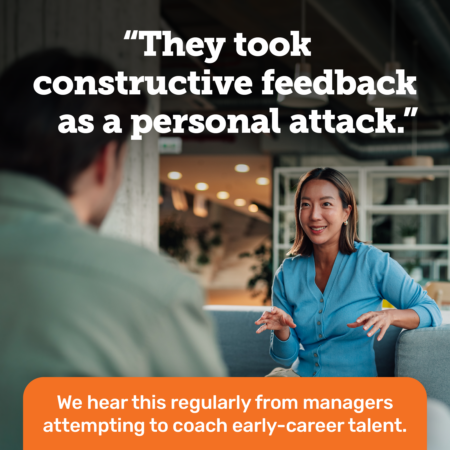
We hear this regularly from managers attempting to coach early-career talent. The knee-jerk reaction to feedback is often defensiveness, interrupting, or making excuses, which halts
See how easy it is to activate soft skills in your organization. Soft skills training on 3 key topics: Leadership, Belonging and Collaboration.