“They’re great at their job, but they struggle with ‘professional norms.’”
“They’re great at their job, but they struggle with ‘professional norms.’” We frequently hear this critique leveled at three groups: Early-career talent (Gen Z) entering

PROUDLY
CANADIAN
Unconscious bias training works to disrupt discriminatory habits by pushing you to challenge and acknowledge your own unconscious biases head-on. To do better, you have to know better.
Unconscious bias training has been effective for creating long-term change, including increasing awareness and concern about discriminatory practices and decreasing implicit bias overall. The key is to regularly engage with the resources necessary for habit-breaking.
Everyone holds their own biases, many of which they are not aware. Implicit biases by definition are unintentional and therefore more difficult to identify — but this doesn’t mean they’re any less damaging than explicit biases.
On a personal level, you can begin to overcome implicit bias by:
The Perception Institute reports, “individualized interventions show promise, but of equal or even greater significance are addressing structural conditions in which people operate. In other words, segregated workplaces, schools, and neighborhoods deeply affect the incidence of implicit bias and in-group preference”.
Unconscious bias training has been proven to work in partnership with committed action and ongoing practice to help you reach your desired DEI outcomes. Further, unconscious bias training can work to unravel the implicit biases hidden in the structures of your workplace’s policies and practices.
See the results yourself by taking the first step today.
Ready to start your DEI journey with Learning Snippets? Sign up to Try Learning Snippets and join the mailing list for our weekly Sunday Snippets newsletter to stay up to date on best practices for diversity, inclusion and equity in the workplace.

“They’re great at their job, but they struggle with ‘professional norms.’” We frequently hear this critique leveled at three groups: Early-career talent (Gen Z) entering


https://dialectic.solutions/wp-content/uploads/2026/09/Undercutting-credibility.mp4 We often notice two polar opposite communication habits in emerging talent: Over-apologizing (“Sorry to bother you,” “Sorry, dumb question…”), which shrinks authority and confidence.
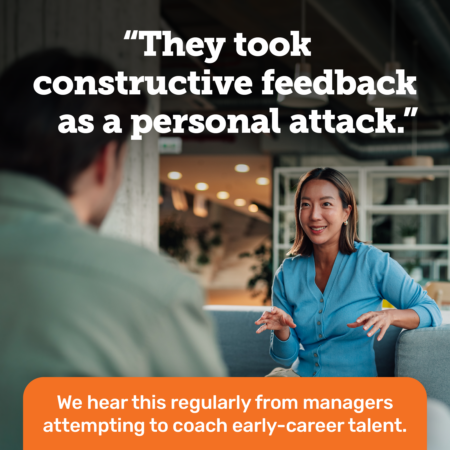
We hear this regularly from managers attempting to coach early-career talent. The knee-jerk reaction to feedback is often defensiveness, interrupting, or making excuses, which halts
See how easy it is to activate soft skills in your organization. Soft skills training on 3 key topics: Leadership, Belonging and Collaboration.