“They’re great at their job, but they struggle with ‘professional norms.’”
“They’re great at their job, but they struggle with ‘professional norms.’” We frequently hear this critique leveled at three groups: Early-career talent (Gen Z) entering

PROUDLY
CANADIAN
Entering our eighth month in quarantine, we are familiar with the complications to daily workplace routines that follow working remotely. You can feel reassured knowing online DEI training won’t be any less effective than the in-person methods you’re used to.
According to the Equality and Human Rights Commission, unconscious bias training online is just as effective as in-person training (including workshops and practical exercises).
The goal of online unconscious bias training is to make employees aware of their unconscious biases and inspire them to take action to be more open-minded.
In a case study led by Doyin Atewologun, Tinu Cornish and Fatima Tresh of the Equality and Human Rights Commission, participants were able to meet their DEI outcome goals. In this study, education and reflection to directly address the unconscious biases influenced by participants’ cultures and personal experiences were proven to be key elements of progress. Ultimately, the study concluded online bias training is equally as effective as in-person training for driving employee behaviour change and an inclusive workplace culture.
The most essential aspect of DEI training is raising long-lasting awareness, and evidence shows this is achievable across various delivery methods including online modes.
In fact, Baroness McGregor-Smith has recommended the government of the United Kingdom enact a free, online unconscious bias training program to tackle ongoing issues with overt and covert racism in the UK.
So, although traditional, in-person training models have existed for much longer than those online, it’s not the only option for achieving desired DEI outcomes. Online training is an appropriate and safe option during the ongoing COVID-19 pandemic — and it works — maybe even better!
Want to try DEI training online for yourself? Sign up to Try Snippets Free and join the mailing list to receive our weekly Sunday Snippets newsletter to stay up-to-date on best practices for diversity, inclusion and equity in the workplace.

“They’re great at their job, but they struggle with ‘professional norms.’” We frequently hear this critique leveled at three groups: Early-career talent (Gen Z) entering


https://dialectic.solutions/wp-content/uploads/2026/09/Undercutting-credibility.mp4 We often notice two polar opposite communication habits in emerging talent: Over-apologizing (“Sorry to bother you,” “Sorry, dumb question…”), which shrinks authority and confidence.
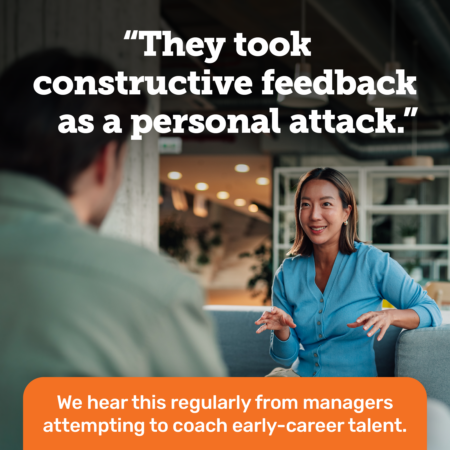
We hear this regularly from managers attempting to coach early-career talent. The knee-jerk reaction to feedback is often defensiveness, interrupting, or making excuses, which halts
See how easy it is to activate soft skills in your organization. Soft skills training on 3 key topics: Leadership, Belonging and Collaboration.