“They’re great at their job, but they struggle with ‘professional norms.’”
“They’re great at their job, but they struggle with ‘professional norms.’” We frequently hear this critique leveled at three groups: Early-career talent (Gen Z) entering

PROUDLY
CANADIAN
Various external pressures including heightened civil unrest, environmental concerns, economic disruption and the ongoing coronavirus pandemic are changing the workforce in big ways. End-of-year 2020 hiring practices need to be made accessible and inclusive to better represent the needs of today’s employees and employers.
You may already be familiar with inclusive, diverse, equitable and anti-racist movements, but putting these ideals into practice as HR leaders requires courage and dedication.
Frank Newman, Founder of Newman Human Resources Consulting Inc., states better hiring practices come from improving the intercultural competence of your organization’s team and leadership, adopting a culturally adaptive leadership style and having regular, open conversations with your prospects and employees.
Foster a workplace culture which emboldens all individuals to be unafraid of being vulnerable and honest about their feelings, behaviours, challenges and opportunities.
Newman has created a 4-step people processes framework, which acts as a starting point for making major steps of the hiring process more inclusive and accessible. It includes:
Hiring doesn’t need to be made more complicated than it already is, especially with the accelerated shift to remote work.
Instead, by reimagining the hiring process to create more equitable workplaces, your organization will be able to move forward by challenging harmful assumptions about prospective talent and current employees more efficiently and effectively.
Interested in more from Learning Snippets? Join the mailing list for our weekly Sunday Snippets newsletter to stay up to date on best practices for diversity, inclusion and equity in the workplace.

“They’re great at their job, but they struggle with ‘professional norms.’” We frequently hear this critique leveled at three groups: Early-career talent (Gen Z) entering


https://dialectic.solutions/wp-content/uploads/2026/09/Undercutting-credibility.mp4 We often notice two polar opposite communication habits in emerging talent: Over-apologizing (“Sorry to bother you,” “Sorry, dumb question…”), which shrinks authority and confidence.
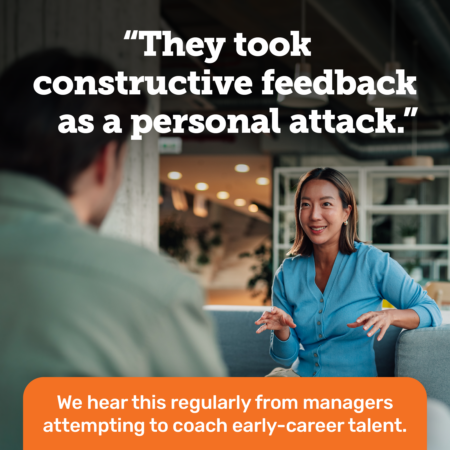
We hear this regularly from managers attempting to coach early-career talent. The knee-jerk reaction to feedback is often defensiveness, interrupting, or making excuses, which halts
See how easy it is to activate soft skills in your organization. Soft skills training on 3 key topics: Leadership, Belonging and Collaboration.