As we mark Neurodiversity Celebration Week, it’s time to shift our perspective on workplace mental health.
Approximately 15–20% of the population identifies as neurodivergent – including those with Autism, ADHD, Dyslexia, Dyscalculia, Dysgraphia, Tourette Syndrome, and sensory processing differences.
Neurodivergence impacts workplace mental health in two critical ways:
- Increased Risk: Neurodivergent employees are statistically more likely to experience challenges like depression and anxiety.
- Personalized Needs: What supports mental health for a neurotypical employee may not be effective for someone who processes information differently.
The most effective mental health tool isn’t a policy – it’s a conversation.
How to Lead with Individualized Support:
✅ Ask: “How do you like to be celebrated?” For some, a quiet email or an extra day off is far more meaningful than public recognition that might trigger social anxiety or sensory overwhelm.
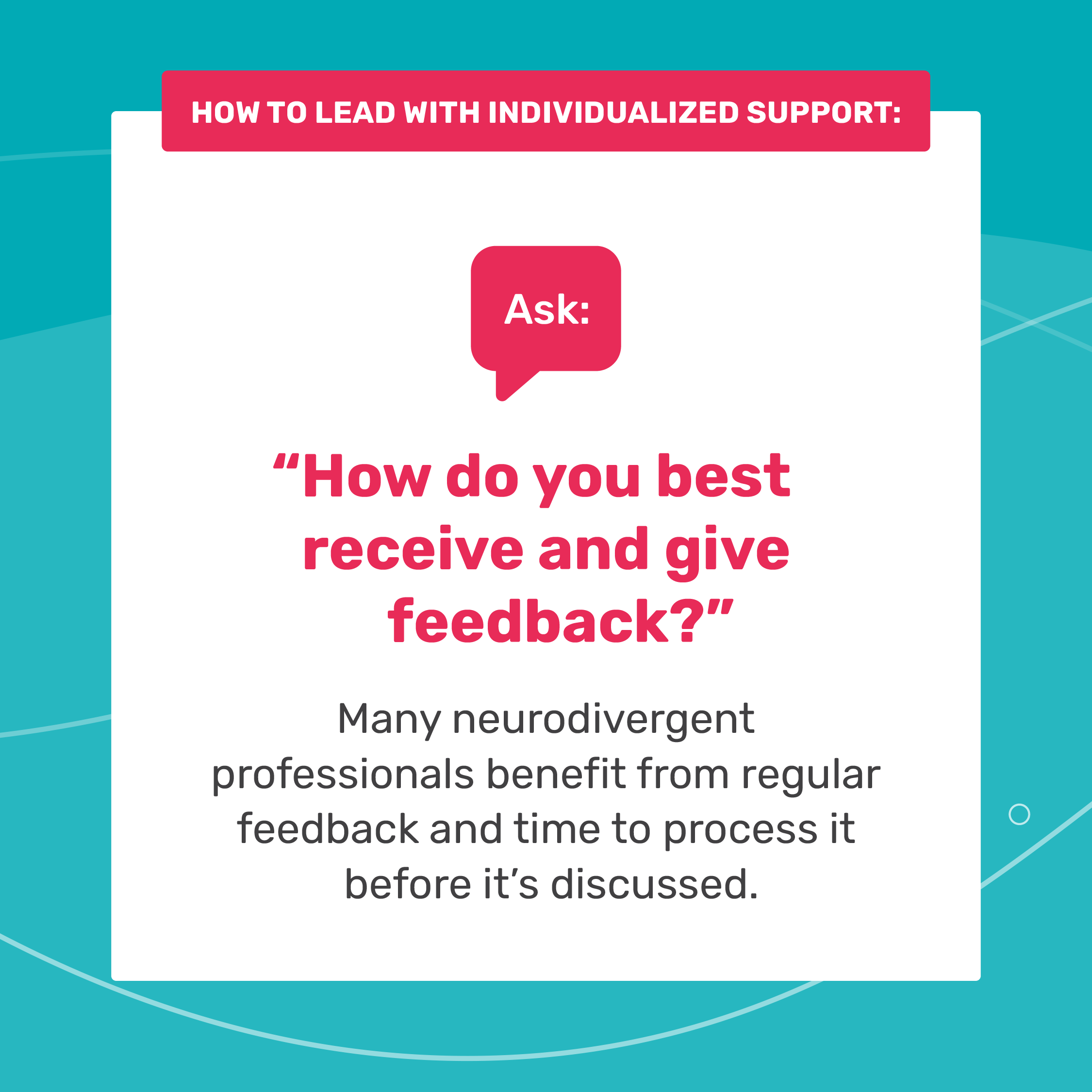
✅ Ask: “How do you best receive and give feedback?” Many neurodivergent professionals benefit from regular feedback and time to process it before it’s discussed.
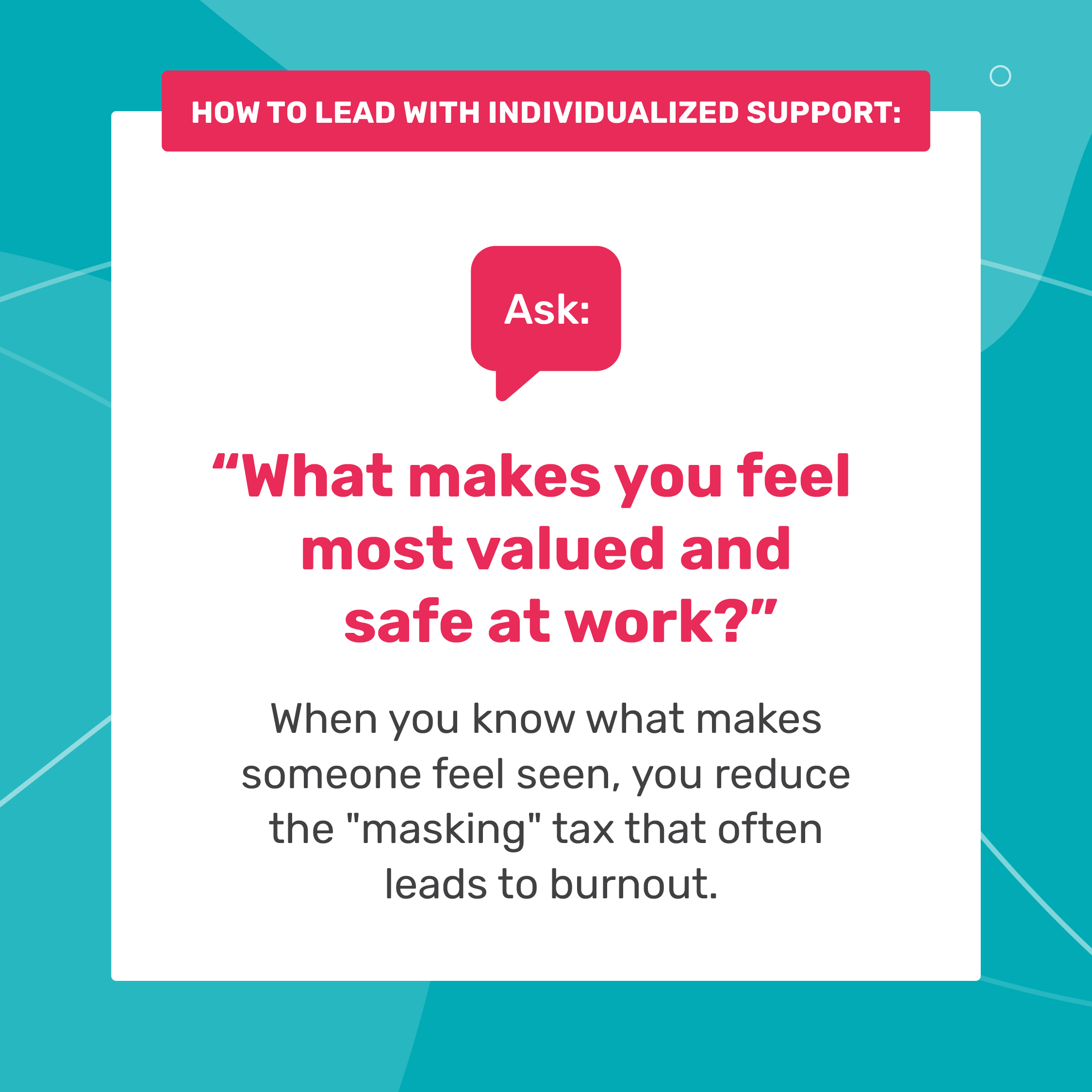
✅ Ask: “What makes you feel most valued and safe at work?” When you know what makes someone feel seen, you reduce the “masking” tax that often leads to burnout.
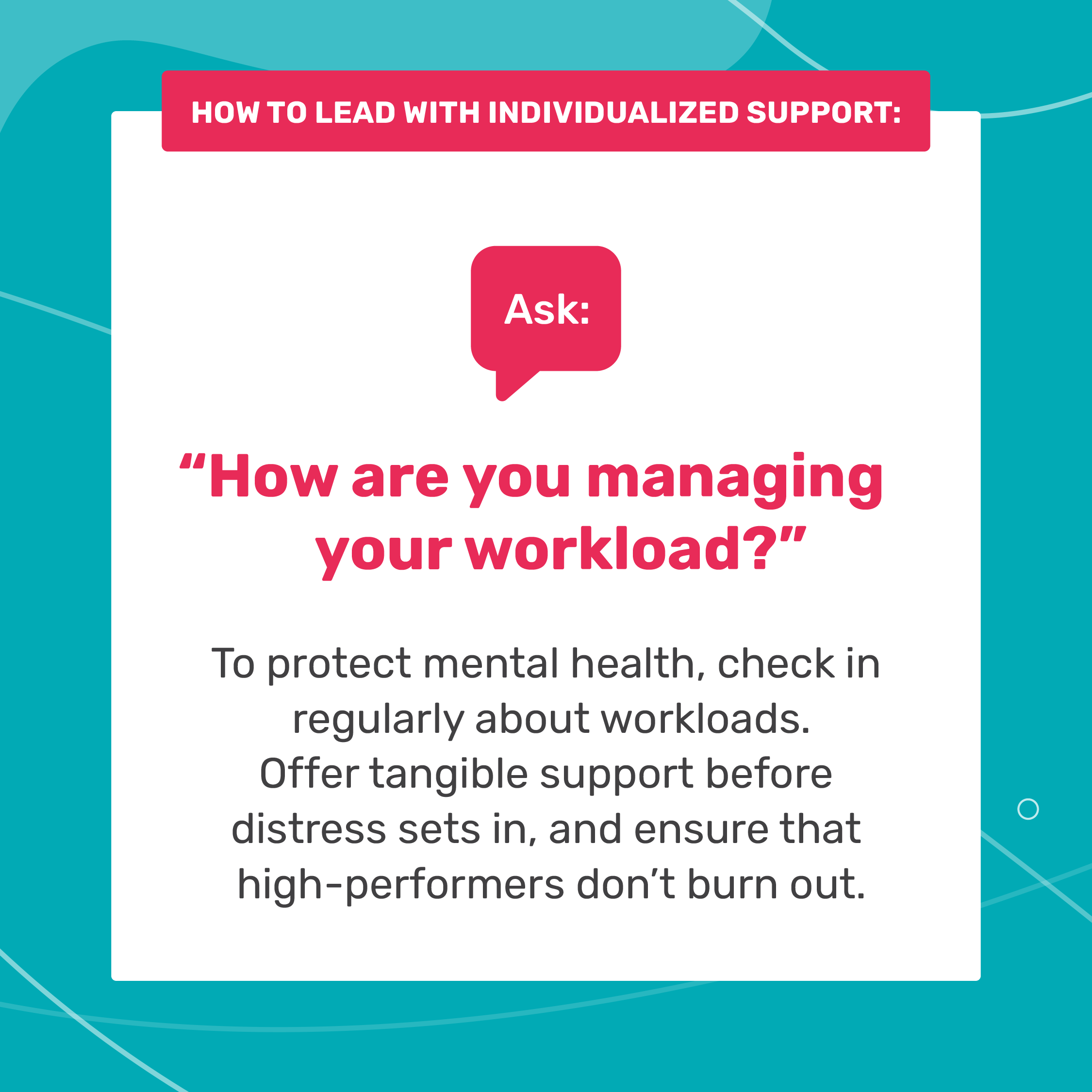
✅ Ask: “How are you managing your workload?” To protect mental health, check in regularly about workloads. Offer tangible support before distress sets in, and ensure that high-performers don’t burn out.
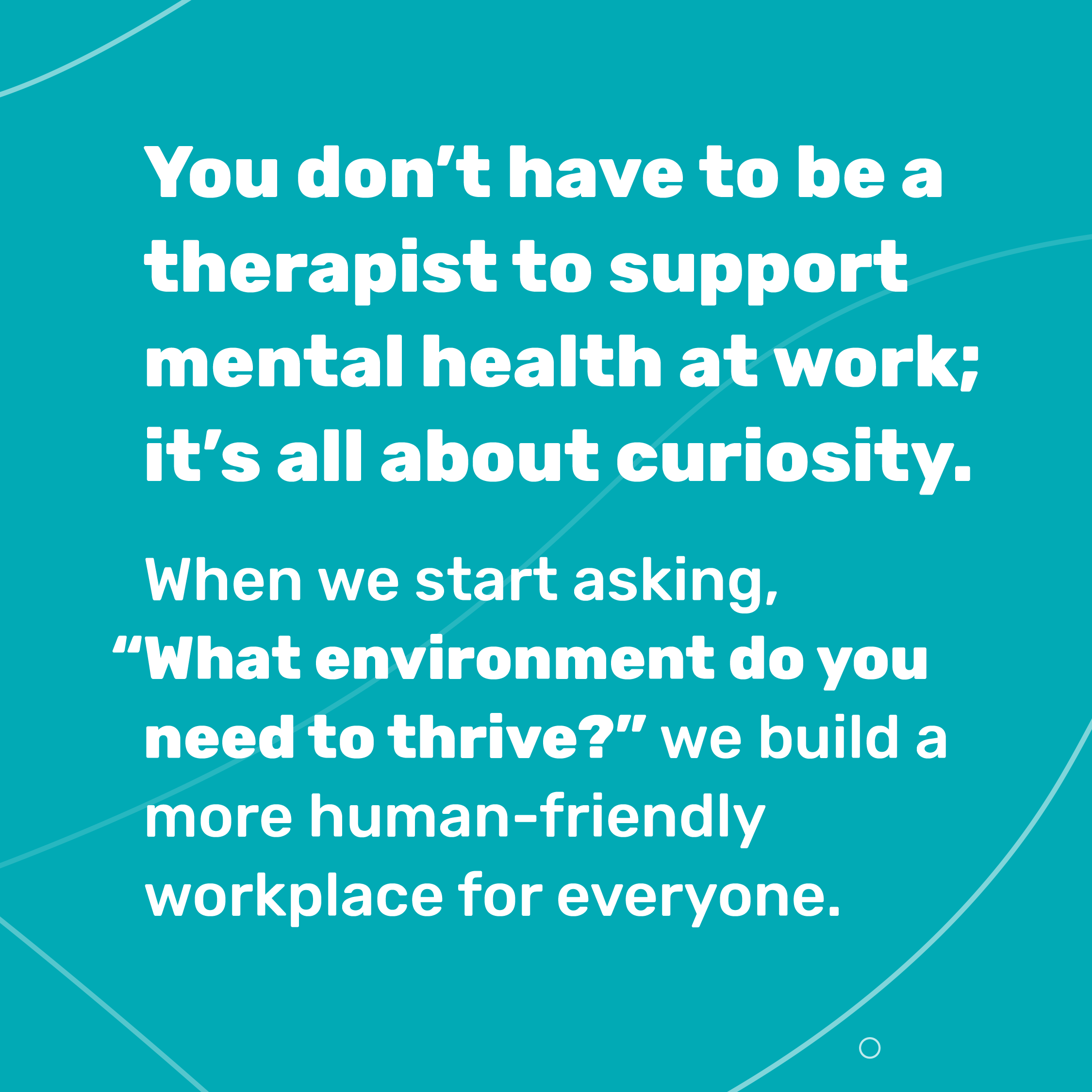
You don’t have to be a therapist to support mental health at work; it’s all about curiosity.
When we start asking, “What environment do you need to thrive?” we build a more human-friendly workplace for everyone.